Project-local memory.
Each repo keeps its own working state. You can link broader context when you want it, not before.
Muse Memory is a local-first memory layer for agents. It keeps project facts, working constraints, and handoffs in one place, so the next session starts with the same picture.

Start with one command, keep the current task in view, and use the same store from the CLI, the MCP server, or the dashboard.
bunx musememory installThese are the parts that matter most when the work spans multiple sessions, multiple tools, and more than one agent.
Each repo keeps its own working state. You can link broader context when you want it, not before.
The active task, open loops, and handoff notes live in plain Markdown so a new session can pick them up fast.
Claims keep their source trail, so the next person or agent can see what changed and why it was kept.
Vibeguard checks for obvious credentials before they land in memory, so the store does not become a leak path.
The page stays close to the same rhythm as the reference site: a simple promise up top, one practical way to begin, and a section that shows where it fits in the real workflow.
Muse Memory plugs into CLI agents, MCP clients, and the local dashboard without asking for a new workflow.
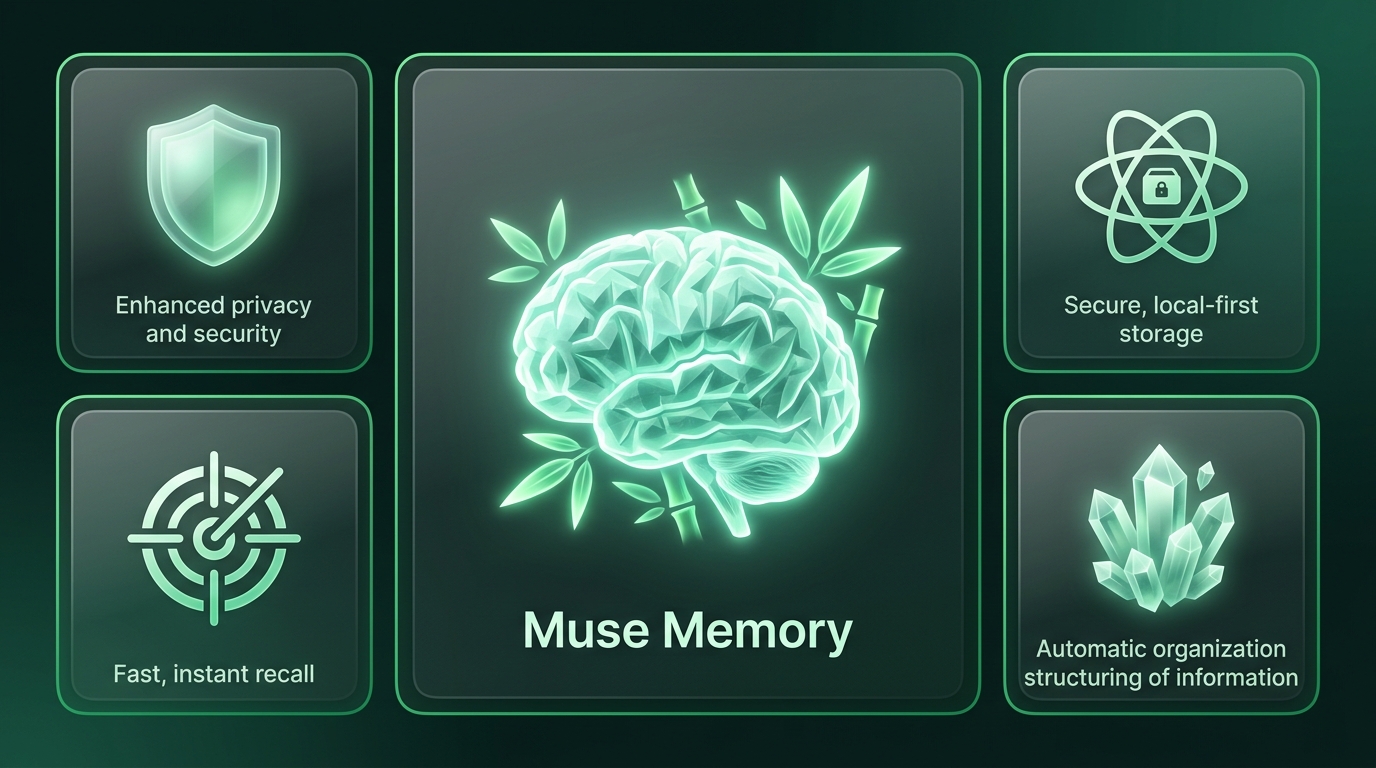
This section mirrors the reference layout's release area, but keeps the copy grounded in what Muse Memory actually does today.
Use the optimizer when the store needs a clean pass. It trims low-value clutter and keeps the useful parts near the surface.
The dashboard keeps health, workstreams, and active constraints visible without asking you to dig through separate files.
Multiple agents can stay coordinated because the active task and next step are written down where everyone can see them.
If the work matters tomorrow, it belongs in Muse Memory today. Start local, keep the state visible, and let the next session begin with context instead of guesswork.